Odysseus
King of Ithaca, famed for cunning, whose homecoming lasts ten years.
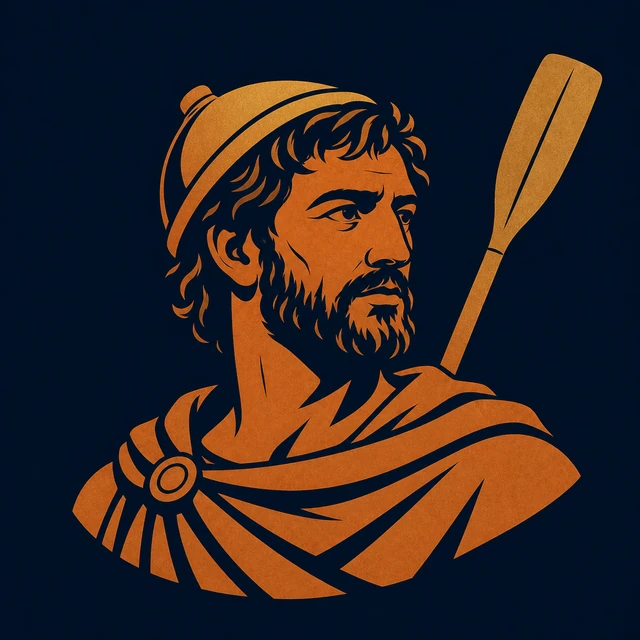
Overview
Odysseus is king of Ithaca and the central figure linking the Trojan War to the Odyssey’s homecoming. Pseudo-Apollodoran prehistory says he tries to avoid the expedition by feigning madness but is exposed and joins the coalition. Near the war’s end he proposes the hollow-horse strategy while Epeius performs the construction. The Odyssey turns the ten years after victory into another trial shaped by monsters, gods, temptation, lost companions and concealed identity. Naming himself after escaping Polyphemus converts a clever victory into Poseidon’s hostility; even in Ithaca, disguise, scar, bow and the secret of the marriage bed must restore household and political identity in stages.
Key facts
Nobody and the true name
He escapes Polyphemus under the name Nobody, then declares his true name offshore, enabling the Cyclops to direct his prayer for vengeance to Poseidon.
Consulting the dead
Following Circe's directions, he summons Tiresias and learns of the cattle taboo, the crisis in Ithaca and a journey still to follow after his return.
From feigned madness to service
Pseudo-Apollodoran prehistoryPseudo-Apollodorus says Odysseus feigns madness to avoid the expedition but joins after Palamedes exposes the pretence.
Further spoiler details are available in the interactive atlas.
Relationships
- Laertesfather of
Laertes is the father of Odysseus.
- Anticleamother of
Anticlea is the mother of Odysseus.
- Telemachusfather of
Telemachus grows to adulthood during his father's absence.
- Penelopemarried to
Their reunion is the emotional centre of the homecoming.
- Calypsodesires
Calypso wishes Odysseus to remain and accept immortality.
- Circelovers
After their confrontation, Odysseus remains on Aeaea for a year.
- Athenaprotects
Athena guides Odysseus home through counsel, disguise and persuasion.
- Hermesaids
Hermes supplies the moly herb and carries the order for Odysseus' release.
- Aeolusgrants winds
Aeolus binds the contrary winds, bringing the fleet almost to Ithaca.
- Circeadvises
Circe explains the route below and the dangers that follow.
- Tiresiasprophesies for
Tiresias reveals the taboos and cost of the journey home.
- Nausicaarescues
Nausicaa gives the castaway clothing, food and directions to the city.
- Aretereceives appeal
Odysseus first directs his appeal to Queen Arete.
- Alcinoussends home
Alcinous provides the Phaeacian ship that carries Odysseus to Ithaca.
- Eumaeusshelters
Eumaeus welcomes the disguised stranger without knowing his identity.
- Telemachusfights beside
After their reunion, father and son plan to retake the palace.
- Eurycleiakeeps secret
After recognising the scar, Eurycleia keeps her master's identity secret.
- Zeuspermits return
Zeus approves the divine decision allowing Odysseus to leave Ogygia.
- Poseidonpersecutes
Poseidon prolongs the wanderings after Polyphemus is harmed.
- Polyphemusblinds
Odysseus blinds the Cyclops with a stake to escape the cave.
- The Suitorsstrikes against
On returning, Odysseus takes vengeance on the men occupying his home.
- Scyllaattacks crew
Scylla snatches six companions from the passing ship.
- Charybdisthreatens voyage
Charybdis' whirlpool forces the ship toward Scylla's side.
- Sirenstempt
Odysseus binds himself to the mast so he may hear without yielding.
- Laestrygoniansdestroy fleet
The giants smash the ships trapped in their harbour with boulders.
- Trojan Warfights in
Odysseus leads the Ithacan contingent to Troy.
- Blinding of Polyphemusperforms
Odysseus devises and leads the escape plan.
- Descent to the Underworldundertakes
Odysseus summons the dead according to Circe's instructions.
- Contest of the Bowwins
Only the disguised Odysseus can string his own bow.
- Return to Ithacareturns in
Odysseus steps onto his homeland disguised as a beggar.
- Poseidon's Stormendures
Odysseus' raft breaks apart in the storm.
- Ithacarules
Odysseus is king of Ithaca.
- Troydeparts from
After Troy falls, Odysseus begins the voyage home.
- Ogygiastranded on
Odysseus remains stranded on Ogygia for years.
- Aeaeavisits
Odysseus spends a year on Aeaea.
- Underworldenters
Odysseus reaches the realm of the dead in search of prophecy.
- Scherialands on
After the storm, Odysseus swims ashore on Scheria.
- Thrinacialands on
The crew is trapped on the island of the sacred cattle.
- Contest of the Bowreveals
Stringing the bow reveals the stranger as Ithaca's king.
- Iphigeniafetches under a marriage pretext
Pseudo-Apollodorus says Odysseus is sent to fetch Iphigenia under a marriage pretext.
- Wooden Horsedevises
Odysseus proposes the strategy of the hollow horse.
- Ajaxcompetes for Achilles’ arms
Achilles’ arms ultimately go to Odysseus, leaving Ajax devastated by the outcome.
- Descent to the Underworldperforms the rite for shades
Odysseus digs the pit, pours offerings and sacrificial blood, and controls the order in which shades approach.
- Elpenorasks him to return for burial
Elpenor asks Odysseus to return to Aeaea, cremate him, raise a mound and set up the oar.
- Anticleaexplains why a shade cannot be held
Anticlea explains that death consumes the body and the spirit flies away, so her son cannot hold her.
- Ajaxrefuses reconciliation
Ajax remains angry over the contest for Achilles’ arms and refuses to answer Odysseus.
Story appearances
- The Odyssey HomecomingWandering king of Ithaca and teller of his own story
Through cunning, endurance and concealed identity, Odysseus crosses a ten-year return and restores family and kingship.
- The Trojan WarConscripted commander and horse strategist
Moves from attempted avoidance to coalition service, devises the horse and begins a long return.
- Gates of the UnderworldLiving man summoning shades for knowledge at Ocean’s edge
Living man summoning shades for knowledge at Ocean’s edge, part of the Underworld story's crossings, losses, judgments or guarded spaces.
- Olympian OrderHomebound mortal at the centre of Olympus’s council
Odysseus is not present on Mount Olympus, but his blocked return gives Athena a reason to petition Zeus and Zeus a reason to send Hermes.
Ancient sources
MythWeave distinguishes ancient-source evidence from later adaptations and modern interpretation.
- Homer, Odyssey, Books 1–24
- Homer, Iliad, Books 1–24
- Homer, Odyssey, Book 10.487–540: Circe’s command and the route toward Acheron
- Homer, Odyssey, Book 11.1–50: the rite for shades at Ocean’s edge
- Homer, Odyssey, Book 10.541–574: Elpenor dies accidentally and unnoticed
- Homer, Odyssey, Book 11.51–89: Elpenor asks for burial and an oar marker
- Homer, Odyssey, Book 11.90–151: Tiresias prophesies the return and later obligation
- Homer, Odyssey, Book 11.152–224: Anticlea’s death and the shade that cannot be embraced
- Homer, Odyssey, Book 11.385–567: Agamemnon, Achilles and Ajax
- Homer, Odyssey, Book 9.39–566: post-war voyage and Polyphemus
- Homer, Odyssey, Book 10.133–574: Circe and directions to the dead
- Homer, Odyssey, Book 11: the Underworld, Tiresias and the shades
- Homer, Odyssey, Book 19: Eurycleia recognises the scar
- Homer, Odyssey, Book 21: contest of the bow
- Homer, Odyssey, Book 23: Penelope and the bed test
- Pseudo-Apollodorus, Bibliotheca, Epitome, E.3.6–7: Menelaus requests mobilisation and Odysseus is compelled to join
- Pseudo-Apollodorus, Bibliotheca, Epitome, E.5.8–14: Paris’ death, conditions for capture, the Palladium and horse construction
- Homer, Odyssey, Book 8.492–520: Demodocus sings of the horse and sack