Troy
City of the ten-year war and the starting point of Odysseus' return.
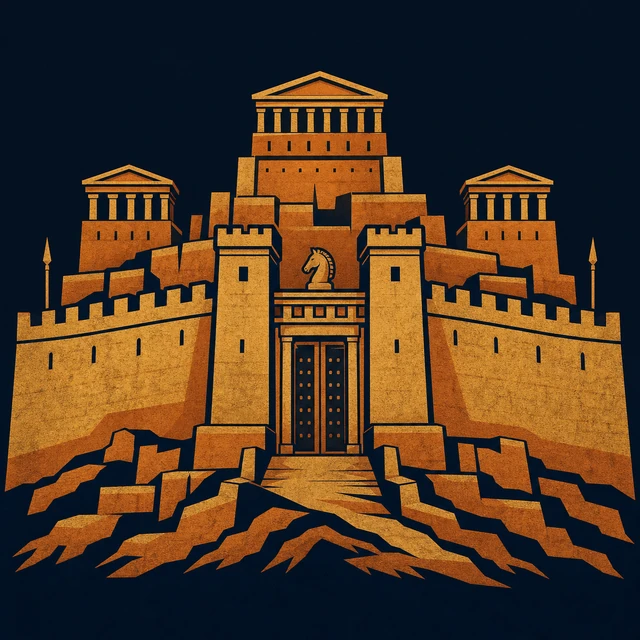
Overview
Troy is the city of the ten-year war and the shared departure point for the homecoming stories of the Odyssey. The Iliad concentrates on a short period late in the war and does not narrate the full wooden-horse episode or the city's fall. The Odyssey instead assembles an afterimage through the recollections of Nestor, Menelaus, Helen, Demodocus and Odysseus. On Scheria, Demodocus sings of the horse and sack, making the still-anonymous Odysseus weep and pressing him toward disclosure of his identity and voyage.
Key facts
The war's end leads to many returns
Homecoming framework of the OdysseyThe Odyssey compares several Achaean returns; Odysseus' ten-year wandering is the longest road home, not the only one.
Song makes the anonymous guest weep
When Demodocus sings of the wooden horse, Odysseus hides his tears; Alcinous then asks the guest to explain who he is.
Relationships
- Odysseusdeparts from
After Troy falls, Odysseus begins the voyage home.
- Parisbrings Helen to
After storm and eastern Mediterranean travel, Paris reaches Troy.
- Priamrules
Priam is king of Troy.
- Hectordefends
Hector treats the defence of Troy as a public duty.
- Andromachelives in
Andromache waits inside Troy for news from battle.
- Hecubaqueen of
Hecuba is queen of Troy.
- Sack of Troydestroys
After entering, the Achaeans kill, plunder and burn Troy.
Story appearances
- The Odyssey HomecomingStarting point of the wandering
Troy is the war's endpoint and the departure point for Odysseus' voyage home.
- The Trojan WarFamily city and object of siege
The community Hector defends and the city destroyed after accepting the horse.
Ancient sources
MythWeave distinguishes ancient-source evidence from later adaptations and modern interpretation.