Blinding of Polyphemus
Odysseus uses the name Nobody to trick and blind Polyphemus.
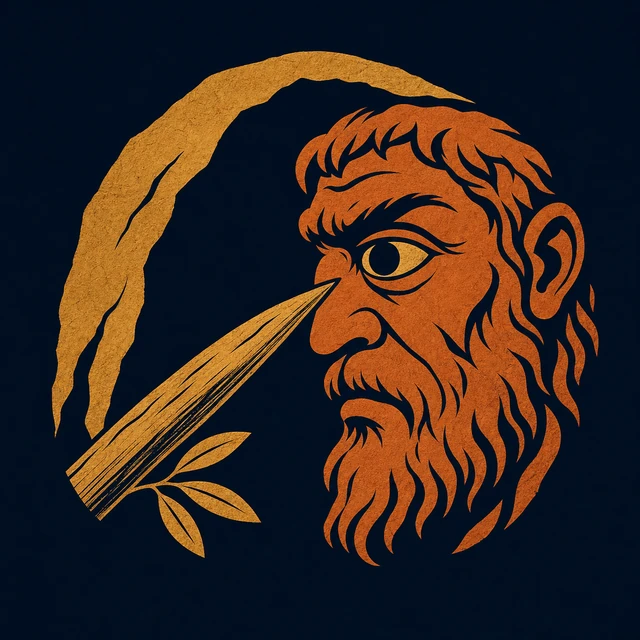
Overview
The blinding of Polyphemus combines verbal deception, collective violence and the risk of identity. Odysseus first intoxicates the Cyclops with strong wine and gives his name as Nobody, then he and his companions drive a fire-hardened olive stake into the eye. When the monster cries that Nobody is hurting him, the neighbouring Cyclopes depart. Escape depends on tying the men beneath the sheep, beyond the reach of Polyphemus as he feels their backs. Yet offshore Odysseus announces his true name, enabling the Cyclops to direct a precise prayer for revenge to his father Poseidon. The successful stratagem thus creates its own long-term consequence.
Key facts
Name, stake and flock form one plan
Odyssey Book 9The false name blocks assistance, the stake disables the guard, and the flock defeats touch inspection; all three stages are necessary.
The true name transfers the conflict to a god
Once Odysseus identifies himself, Polyphemus asks Poseidon to delay his homecoming.
Relationships
- Odysseusperforms
Odysseus devises and leads the escape plan.
- Polyphemustarget of
Polyphemus is blinded after being overcome with wine.
- Poseidonprovokes
Polyphemus' prayer brings Poseidon's wrath upon the voyage.
Story appearances
- The Odyssey HomecomingTurning point that provokes the sea god
The cave escape succeeds, but naming himself turns victory into divine vengeance.
Ancient sources
MythWeave distinguishes ancient-source evidence from later adaptations and modern interpretation.