Athena
Goddess of wisdom and strategy, and Odysseus' chief divine ally.
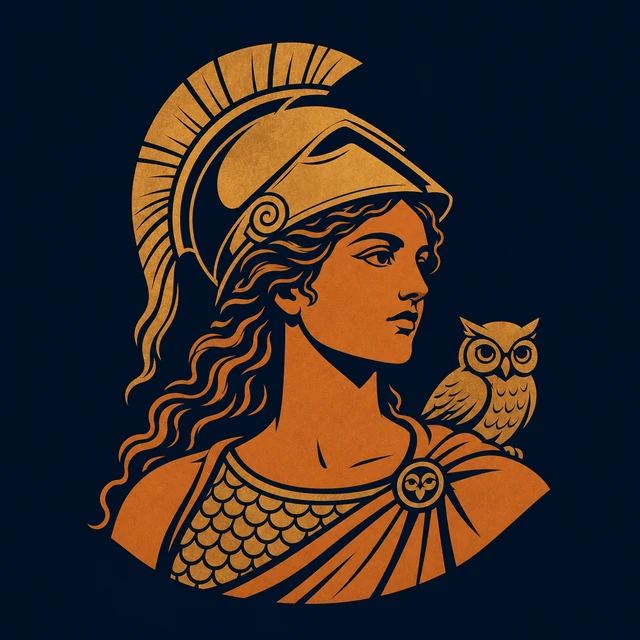
Overview
Across stories Athena intervenes through strategy, recognition and timing rather than simply supplying force. In Paris' choice, she is one of the three goddesses who offer him a reward. In Iliad Book 5 she gives Diomedes sight to distinguish gods and personally guides his attack on Ares; Odyssey Book 8 song also connects her with Epeius' making of the horse. After the war she prompts Telemachus to seek news of his father, arranges disguises and recognitions for Odysseus, and finally stops retaliation in Ithaca. From battlefield to homecoming, her help creates openings that still require mortals to judge, restrain themselves and act at the right moment. Hesiod's Metis succession context sits beside the hymn's armed emergence of Athena from Zeus's head, while the Odyssey makes her the proposer in council.
Key facts
Setting Telemachus in motion
In assumed identities including Mentes, Athena urges Telemachus to call an assembly and travel for news of his father, shifting him from waiting to action.
Guiding Diomedes
Athena first gives Diomedes sight to recognise gods and later mounts the chariot to guide his wound against Ares.
Building and pushing Argo
Athena helps Argus build the ship and later pushes Argo from the stern at the Clashing Rocks.
Teaching and adorning Pandora
Both Hesiodic accounts have Athena clothe and adorn the first woman; Works and Days also adds instruction in weaving.
Further spoiler details are available in the interactive atlas.
Relationships
- Zeusfather of
Athena is born from the head of Zeus.
- Odysseusprotects
Athena guides Odysseus home through counsel, disguise and persuasion.
- Telemachusmentors
Athena, often as Mentor, urges Telemachus to seek news of his father.
- Aresopposes in battle
The two war gods support opposing sides at Troy.
- Trojan Warbacks Greeks
Athena supports the Greek side in the war.
- Return to Ithacaguides
Athena creates the disguise and plans with Odysseus.
- Paris Chooses Aphroditeoffers a reward
Athena offers victory as the reward for Paris choosing her.
- Diomedesgrants sight and force
Athena gives Diomedes strength and sight to recognise gods.
- Wooden Horseassists the device
The Odyssey’s song says Epeius makes the horse with Athena’s assistance.
- Zeuspetitions for Odysseus's return
Athena asks the divine council to address Odysseus's detention.
- Heraclesgives bronze clappers
Athena gives Heracles bronze clappers made by Hephaestus.
- Golden Apples of the Hesperidesreturns the divine objects
After delivery, Athena restores the golden apples to their proper place.
- Argohelps build
Athena assists Argus in material and construction of the seagoing ship.
- Argopushes through from the stern
When the stern is about to be caught, Athena pushes Argo through the final distance.
- Jasonjoins the search for a solution
Athena consults with Hera on how Jason can survive the Colchian problem.
- Pandoraclothes and adorns
Athena clothes and adorns the first woman; Works and Days also has her teach weaving.
Story appearances
- The Odyssey HomecomingDivine ally in return and restoration
Athena uses disguise, counsel and intervention to help Odysseus restore order in Ithaca.
- The Trojan WarAchaean patron of strategy and force
Makes her offer to Paris, guides Diomedes and assists the horse stratagem in later memory.
- Birth of the GodsFamiliar deity in the proem
One of the familiar gods sung by the Muses, drawing readers from known Olympian figures back toward questions of origin.
- Olympian OrderZeus-born goddess who advances action in council
Zeus-born goddess who advances action in council within the family, honours or council order that follows Zeus' victory.
- The Labours of HeraclesAthena in the Labours
Athena enters this story through Heracles' labours; when other stories return to the figure, they follow that later setting.
- The ArgonautsAthena in the Argonaut expedition
Athena enters this story through the Argonaut expedition; other versions are handled where their own episodes call for them.
Ancient sources
MythWeave distinguishes ancient-source evidence from later adaptations and modern interpretation.
- Homer, Odyssey, Books 1–24
- Homer, Iliad, Books 1–24
- Hesiod, Theogony, Lines 1–115: the Muses, the poet's commission and the questions of divine origins
- Hesiod, Theogony, Lines 886–900: Metis, the succession prophecy and swallowing
- Hesiod, Theogony, Lines 918–929: the families of Leto and Hera and the births of Athena and Hephaestus
- Homeric Hymn tradition, Homeric Hymn to Athena, Lines 1–15: Athena emerges armed from Zeus's head
- Homeric Hymn tradition, Homeric Hymn to Aphrodite, Lines 1–32: three exempt goddesses and Hestia's oath and honour
- Homer, Iliad, Book 1.493–611: Thetis's petition, Zeus and Hera's quarrel and Hephaestus' mediation
- Homer, Odyssey, Book 1.26–95: the divine council discusses Odysseus's return
- Homer, Odyssey, Book 5.1–42: council decision and Zeus's commission to Hermes
- Pseudo-Apollodorus, Bibliotheca, 2.5.6: Athena’s bronze clappers drive the birds from cover
- Pseudo-Apollodorus, Bibliotheca, 2.5.11: Prometheus’ advice, Atlas’ burden, counter-ruse and return of the apples
- Diodorus Siculus, Library of History, 4.25.1–4.26.4: Cerberus eleventh, apples last, and alternative apple accounts
- Apollonius Rhodius, Argonautica, Book 1.23–233: expedition catalogue and individual skills
- Apollonius Rhodius, Argonautica, Book 1.306–558: launch, sacrifice, song and departure
- Apollonius Rhodius, Argonautica, Book 2.528–647: dove test, Clashing Rocks and Athena pushes Argo
- Apollonius Rhodius, Argonautica, Book 3.6–110: Hera, Athena, Aphrodite and Eros plan
- Apollonius Rhodius, Argonautica, Book 3.471–1162: Medea deliberates, meets Jason and provides charm and instructions
- Hesiod, Theogony, Lines 561–616: fire withheld and stolen, the first woman and punishment
- Hesiod, Works and Days, Lines 59–82: the gods fashion and adorn the woman; Hermes gives voice and the name Pandora
- Homer, Odyssey, Books 1–4: Athena and Telemachus
- Homer, Odyssey, Book 13: Phaeacian passage and return to Ithaca
- Homer, Odyssey, Book 24: retaliation and settlement
- Homer, Iliad, Book 5: Diomedes' aristeia and the wounding of Aphrodite and Ares
- Homer, Odyssey, Book 8.492–520: Demodocus sings of the horse and sack