Telemachus
Son of Odysseus and Penelope, who journeys in search of news of his father.
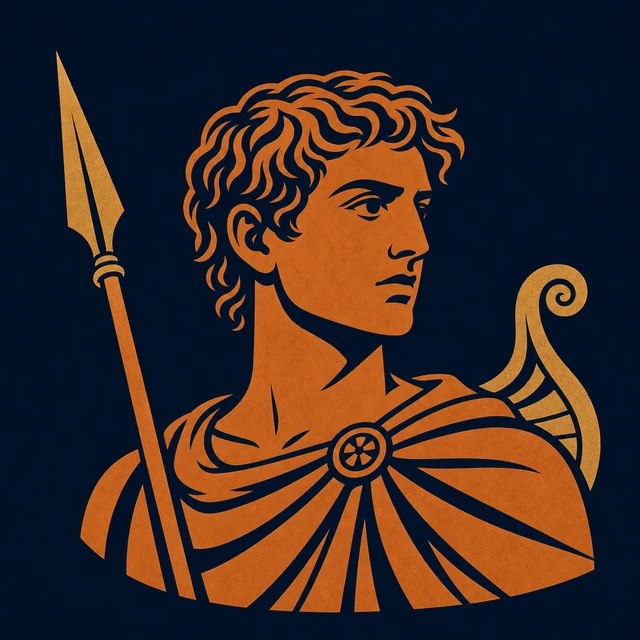
Overview
At the opening of the Odyssey, Telemachus cannot control a palace occupied by the Suitors. Athena, under identities such as Mentes and Mentor, urges him to call an Ithacan assembly and travel to Pylos and Sparta for news of his father. The journey exposes him to other homecoming stories and teaches public speech and decision-making. After avoiding the Suitors' ambush, he meets and recognises his father at Eumaeus' farm in Book 16, changing from a seeker of information into a partner in restoration. His competence and mistakes both remain visible during the fighting in Book 22; maturity is not granted all at once.
Key facts
From assembly to journey
Opening four books of the OdysseyAthena prompts him to oppose the Suitors publicly and then sail to question Nestor and Menelaus, establishing agency of his own.
Further spoiler details are available in the interactive atlas.
Relationships
- Odysseusfather of
Telemachus grows to adulthood during his father's absence.
- Penelopemother of
Penelope is the mother of Telemachus.
- Athenamentors
Athena, often as Mentor, urges Telemachus to seek news of his father.
- Eumaeussupports
Eumaeus remains loyal to Telemachus and his father's house.
- Odysseusfights beside
After their reunion, father and son plan to retake the palace.
- The Suitorsresists
Telemachus increasingly resists the suitors' occupation of his home.
- The Suitorsplot against
The suitors plot an ambush for Telemachus on his return.
Story appearances
- The Odyssey HomecomingSon who becomes an ally after searching for his father
Telemachus grows from a seeker of news into an active partner in reclaiming the household.
Ancient sources
MythWeave distinguishes ancient-source evidence from later adaptations and modern interpretation.