Wooden Horse
The hollow horse built by Epeius and devised by Odysseus, turning siege into deception and infiltration.
Overview
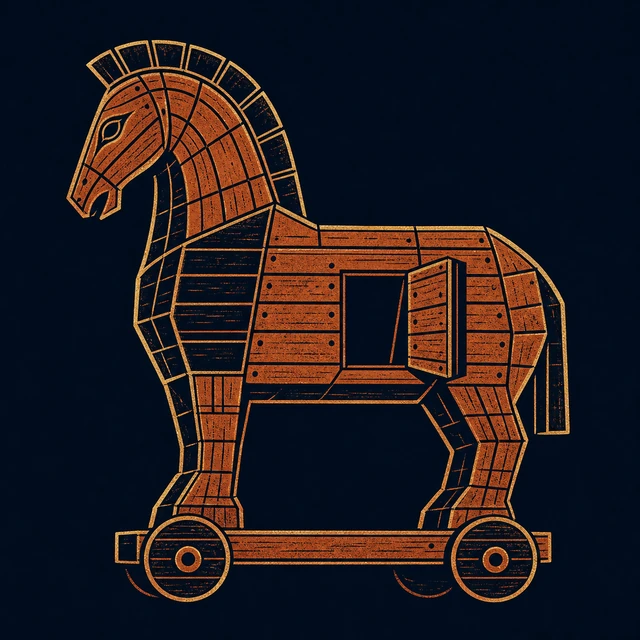
The wooden horse is a collective deception device from the end of the siege, not the ending of the Iliad. Pseudo-Apollodorus attributes the idea to Odysseus and the construction to Epeius. Fighters hide in the hollow body while the rest burn their camp and withdraw to Tenedos, making the object resemble a dedication to Athena. Cassandra and Laocoon warn that armed men are inside, but the city preserves and draws it in. At night the hidden force emerges, opens the gates and admits the returning fleet. Odyssey Book 8 recalls a similar structure through Demodocus’ song and makes Odysseus weep, showing the horse as both tactical victory and traumatic memory.
Relationships
- Odysseusdevises
Odysseus proposes the strategy of the hollow horse.
- Epeiusbuilds
Epeius builds the hollow horse from timber of Ida.
- Athenaassists the device
The Odyssey’s song says Epeius makes the horse with Athena’s assistance.
- Cassandrawarns of armed men
Cassandra says armed men are hidden inside the horse.
- Laocoonurges destruction
Laocoon supports burning the horse or casting it down.
- Sack of Troyopens the way to the sack
The hidden force emerges and opens the gates to the returning army.
Story appearances
- The Trojan WarDevice-event turning siege into deception
Devised by Odysseus and built by Epeius to carry hidden fighters into Troy.
Ancient sources
MythWeave distinguishes ancient-source evidence from later adaptations and modern interpretation.
- Pseudo-Apollodorus, Bibliotheca, Epitome, E.5.8–14: Paris’ death, conditions for capture, the Palladium and horse construction
- Pseudo-Apollodorus, Bibliotheca, Epitome, E.5.15–20: the horse enters Troy, Cassandra and Laocoon warn, and the hidden force opens the gates
- Homer, Odyssey, Book 8.492–520: Demodocus sings of the horse and sack