Tiresias
Blind prophet whose shade reveals the conditions of Odysseus' return.
Overview
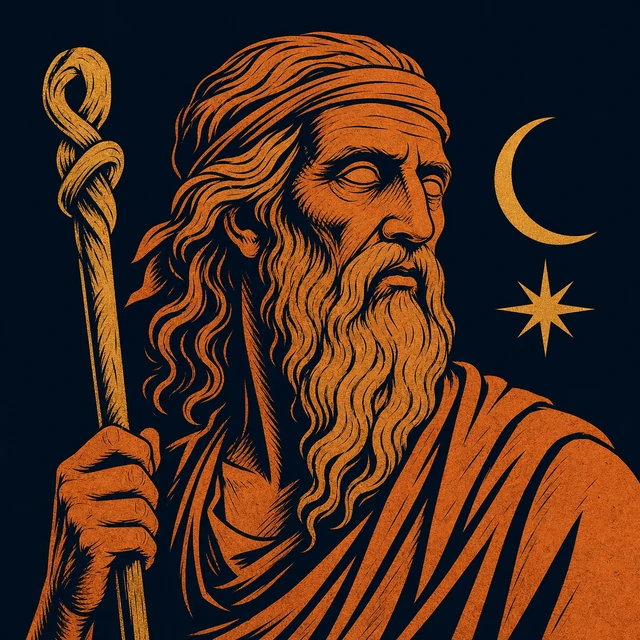
Tiresias is the Theban seer whom Persephone allows to retain clear understanding after death in the Odyssey. Circe sends Odysseus to the world's edge to consult him. After drinking the blood, Tiresias identifies Poseidon's anger, warns against harming the cattle of Helios, and foretells that violation will cost Odysseus his ship and companions before a solitary return. He also describes the crisis of the Suitors and a later journey carrying an oar among people who do not know the sea. Prophecy here does not merely disclose an ending; it states the conditions of homecoming and the responsibilities that continue afterward.
Key facts
Homecoming depends on keeping the taboo
Prophecy in Odyssey Book 11Tiresias makes the cattle taboo a decisive choice: restraint preserves the voyage, while harming the herd destroys crew and ship.
Further spoiler details are available in the interactive atlas.
Relationships
- Odysseusprophesies for
Tiresias reveals the taboos and cost of the journey home.
- Descent to the Underworldprophet in
Tiresias is the prophet sought on the journey below.
- Persephoneallows understanding after death
Circe says Persephone allows Tiresias to retain understanding after death.
Story appearances
- The Odyssey HomecomingDead prophet who defines the conditions of return
Tiresias warns against harming Helios' cattle and foretells Ithaca and what lies beyond.
- Gates of the UnderworldProphet retaining understanding after death and giving return prophecy
Prophet retaining understanding after death and giving return prophecy, part of the Underworld story's crossings, losses, judgments or guarded spaces.
Ancient sources
MythWeave distinguishes ancient-source evidence from later adaptations and modern interpretation.