Pandora
The first woman named in Works and Days, fashioned and adorned by the gods, who later opens the jar containing troubles and Hope.
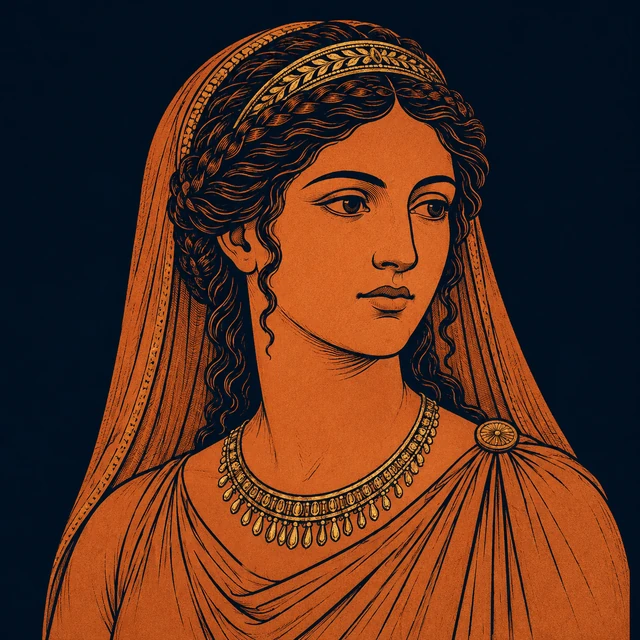
Overview
Pandora is the name Works and Days gives to the first woman. In response to Prometheus’ theft of fire, Zeus orders the gods to fashion her: Hephaestus shapes her from earth and water, Athena teaches and adorns her, other gods add beauty, desire, speech and further capacities, and Hermes gives the name. She is sent to Epimetheus and later opens a great storage jar, releasing troubles among mortals while Hope remains inside. The related woman in the Theogony is unnamed and that poem has no jar episode, so the two accounts must not be fused without labels.
Key facts
Fashioned and named by the gods
Hesiod, Works and Days traditionWorks and Days lists the gods who fashion and adorn her, and has Hermes give her voice and the name Pandora.
The unnamed woman in the Theogony
Hesiod, Theogony traditionThe Theogony presents the first woman as a response to the theft of fire, but does not name her in the passage and contains no jar scene.
A jar, not a box
Works and Days describes a great storage jar: troubles escape from it while Hope remains beneath the lid.
Relationships
- Zeusorders the first woman fashioned
Zeus answers the theft of fire by ordering the first woman fashioned; Works and Days names her Pandora.
- Hephaestusfashions
Hephaestus fashions the first woman according to Zeus’s plan.
- Athenaclothes and adorns
Athena clothes and adorns the first woman; Works and Days also has her teach weaving.
- Hermesgives voice and names
In Works and Days, Hermes gives her voice and the name Pandora.
- Epimetheusaccepts Zeus’s gift
Epimetheus disregards his brother’s warning and accepts Pandora.
- Pandora's Jaropens the great jar
Pandora opens the great jar; troubles spread among mortals while Hope remains inside.
Story appearances
- Olympian OrderThe first woman named in Works and Days
The gods fashion and adorn Pandora according to Zeus’s plan; she is sent to Epimetheus and later opens the great jar containing troubles and Hope.
Ancient sources
MythWeave distinguishes ancient-source evidence from later adaptations and modern interpretation.
- Hesiod, Theogony, Lines 561–616: fire withheld and stolen, the first woman and punishment
- Hesiod, Works and Days, Lines 59–82: the gods fashion and adorn the woman; Hermes gives voice and the name Pandora
- Hesiod, Works and Days, Lines 83–105: Epimetheus accepts the gift; Pandora opens the jar; troubles escape and Hope remains within