Priam
King of Troy and father of Hector, who crosses enemy lines to ransom his son’s body.
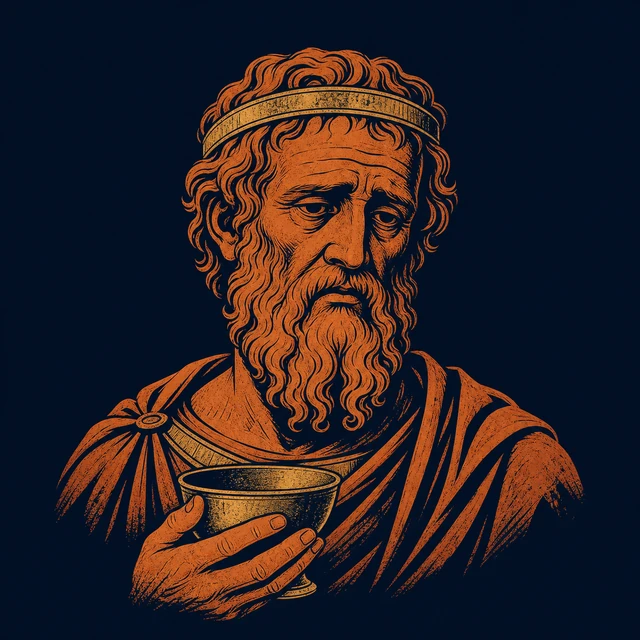
Overview
Priam is king of Troy and father of its large royal household, yet epic does not present him only as a ruler who gives commands. In Iliad Book 3 he asks Helen to identify the Achaean leaders below the walls, turning an enemy army back into remembered people. In Book 24 Hermes guides him across the Achaean camp. Kneeling before Achilles, Priam invokes Peleus and the experience of ageing and bereavement shared by enemies. Ransoming Hector is not a military victory but an interruption of violence that restores burial and mourning. The Iliad consequently ends with funeral order, not with Troy’s destruction.
Key facts
Asking Helen about the enemy
Priam asks Helen to identify the principal Achaean leaders from the wall.
Crossing the lines to ransom a son
Priam invokes Peleus to move Achilles, securing Hector’s body and time for burial.
Relationships
- Helenasks to identify leaders
Priam asks Helen to identify the main Achaean leaders from the wall.
- Troyrules
Priam is king of Troy.
- Parisfather of
Paris is a son of Priam.
- Hectorfather of
Hector is a son of Priam.
- Achillesasks for his son’s body
Priam invokes Peleus to awaken Achilles’ compassion.
- Sack of Troykills at an altar
Pseudo-Apollodorus says Neoptolemus kills Priam at Zeus’ altar.
Story appearances
- The Trojan WarKing crossing enemy lines as a father
Identifies the enemy, mourns Hector and ransoms the body; sack tradition records his death at an altar.
Ancient sources
MythWeave distinguishes ancient-source evidence from later adaptations and modern interpretation.