Achilles
Greatest Greek warrior at Troy, whose shade Odysseus meets below.
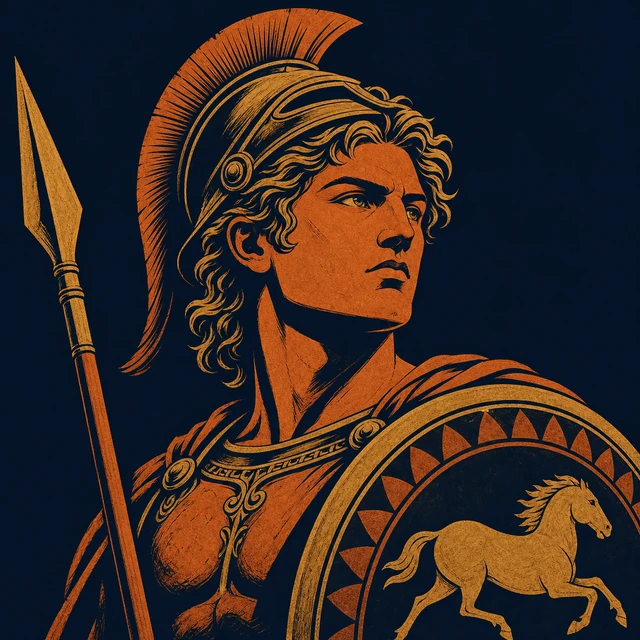
Overview
Achilles is the central hero of the Iliad, joining personal honour, companionship and the army’s fate. He withdraws after Agamemnon takes Briseis; only the death of Patroclus in his armour brings him back to receive new equipment and kill Hector. The Iliad ends with Priam’s ransom and Hector’s funeral, not Achilles’ death. Pseudo-Apollodorus then says Paris and Apollo shoot him at the gate. In Odyssey Book 11 his shade says he would rather labour on earth than rule the dead, placing the imperishable reputation sought at Troy directly beside the cost of dying for it.
Key facts
Life over kingship among the dead
Speech of the shade in Odyssey Book 11Achilles rejects Odysseus' consolation about posthumous honour, preferring hired labour among the living to kingship over the dead.
News of his son's renown
He asks about Neoptolemus and takes comfort when Odysseus recounts the son's conduct at Troy.
Withdrawal, companion and return
Achilles withdraws after dishonour; Patroclus’ death turns the honour dispute into grief-driven return and revenge.
Further spoiler details are available in the interactive atlas.
Relationships
- Agamemnonquarrels with
Their quarrel opens the Iliad.
- Trojan Warfights in
Achilles is the Greeks' deadliest warrior.
- Descent to the Underworldappears in
Achilles and Odysseus speak about death and glory.
- Iphigenianame used in marriage ruse
The summons falsely claims that Iphigenia will marry Achilles.
- Trojan Warwithdraws from
Achilles refuses to continue fighting after his public dishonour.
- Thetismother of
Thetis is Achilles’ divine mother.
- Zeushonours through the battle
Zeus accepts Thetis’ petition and makes Achilles’ absence shape the battle.
- Patroclusclosest companion
Patroclus and Achilles share camp, comradeship and profound attachment.
- Patrocluslends armour
Achilles permits Patroclus to lead the Myrmidons in his armour.
- Patroclusdeath brings back to battle
Patroclus’ death makes Achilles set aside the quarrel with Agamemnon.
- Hephaestusforges new armour
Hephaestus forges new equipment including the shield’s cosmic scenes.
- Hectorkills
Achilles kills Hector outside Troy.
- Priamasks for his son’s body
Priam invokes Peleus to awaken Achilles’ compassion.
- Hectorreturns the body
Achilles accepts ransom and allows Troy to bury Hector.
- Pariskills with Apollo
Pseudo-Apollodorus says Paris and Apollo shoot Achilles in the ankle at the Scaean gate.
- Ajaxrecovers the body
Ajax carries Achilles’ body back through a shower of missiles while Odysseus fights the pursuers.
- Trojan Wardeath shocks the coalition
Achilles’ death shocks the Achaean army and moves the war into its final capture traditions.
Story appearances
- The Odyssey HomecomingWarrior shade in the Underworld
Odysseus meets Achilles below and hears a stark reflection on glory and life.
- The Trojan WarHero moving from withdrawal through revenge to death
His withdrawal imperils the Achaeans; Patroclus’ death brings him back to kill Hector, and Pseudo-Apollodorus then gives his death to Paris and Apollo.
- Gates of the UnderworldHero retaining war-memory in the meadow and consultation
Hero retaining war-memory in the meadow and consultation, part of the Underworld story's crossings, losses, judgments or guarded spaces.
Ancient sources
MythWeave distinguishes ancient-source evidence from later adaptations and modern interpretation.
- Homer, Iliad, Books 1–24
- Homer, Odyssey, Books 1–24
- Homer, Odyssey, Book 24.1–14: Hermes leads the suitors’ shades to the asphodel meadow
- Homer, Odyssey, Book 11.385–567: Agamemnon, Achilles and Ajax
- Homer, Odyssey, Book 11: the Underworld, Tiresias and the shades
- Homer, Iliad, Book 1: Apollo's plague, the quarrel and Hephaestus' mediation
- Homer, Iliad, Book 16.1–867: Patroclus enters battle and dies
- Pseudo-Apollodorus, Bibliotheca, Epitome, E.5.3–7: Achilles’ death, recovery of his body and the awarding of his arms