Helen
Queen of Sparta, whose departure for Troy becomes the war's immediate spark.
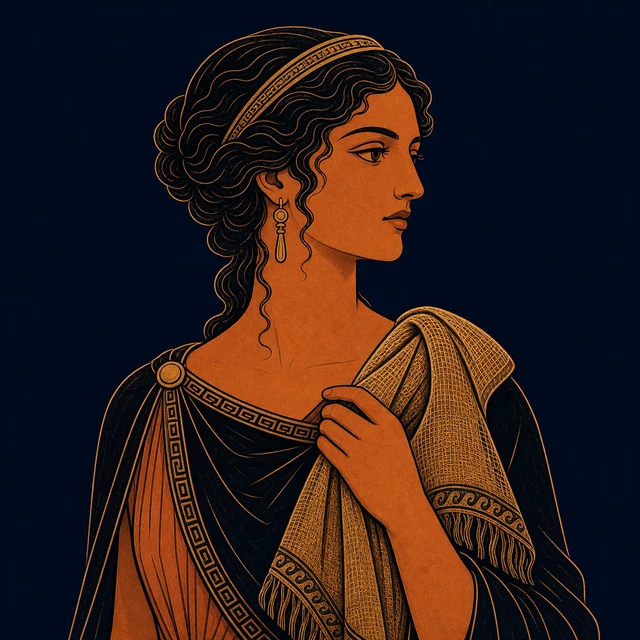
Overview
Helen is queen of Sparta and a central figure through whom Greek epic debates desire, coercion, responsibility and memory. Reducing her to the beauty who caused a war erases the texts' complexity. In Iliad Book 3 she identifies the Achaean leaders from the walls of Troy, condemns herself and longs for home. When Aphrodite orders her back to Paris' room, Helen initially refuses and obeys only after the goddess threatens hatred and death. In Odyssey Book 4 she is again in Sparta, quickly recognises Telemachus and offers memories of Troy that do not simply duplicate Menelaus' account. She is both an object of competing narratives and an active interpreter of the war.
Key facts
Identifying the army and resisting a goddess
Helen's constrained agency in Iliad Book 3Helen identifies the Achaean leaders for Priam; after the duel she refuses Aphrodite's arranged meeting but is compelled by the goddess' threats.
Retelling Troy in Sparta
After recognising Telemachus, Helen recounts Odysseus entering Troy in disguise, while Menelaus adds a different memory involving those hidden in the wooden horse.
Relationships
- Menelausmarried to
After Helen leaves Sparta, Menelaus rallies the expedition to Troy.
- Trojan Warcentral to
Helen's presence at Troy becomes the war's immediate cause.
- Parisleaves Sparta with
After receiving Menelaus’ hospitality, Paris departs by ship with Helen.
- Priamasks to identify leaders
Priam asks Helen to identify the main Achaean leaders from the wall.
- Aphroditecoerces toward Paris
When Helen resists returning to Paris, Aphrodite threatens hatred and death.
- Menelaustakes back to the ships
Pseudo-Apollodorus says Menelaus leads Helen back to the ships.
Story appearances
- The Trojan WarContested figure and interpreter of war
Her departure becomes a reason for war, while on the wall she identifies Achaean leaders from memory.
Ancient sources
MythWeave distinguishes ancient-source evidence from later adaptations and modern interpretation.