Vafthruthnir
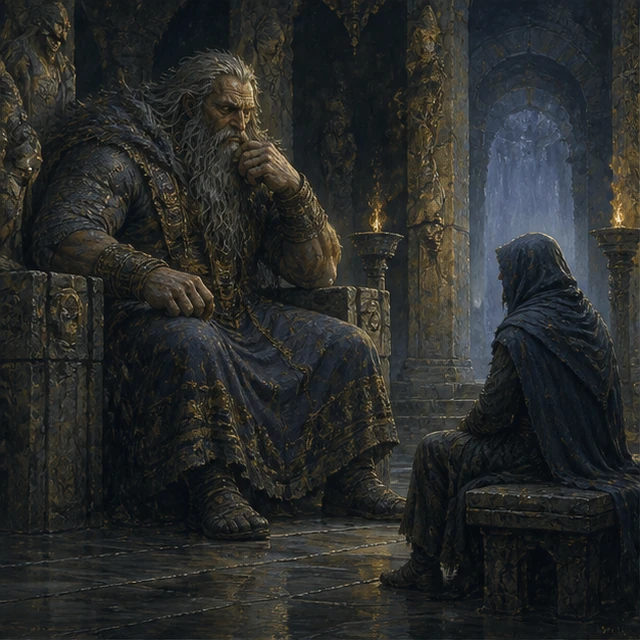
The giant who receives Odin in questions and finally recognizes his opponent.
Overview
Vafthruthnir’s hall is not a battlefield but a place where a guest is held to a wager of knowledge. He first asks “Gagnrath” four questions, lets Odin reverse the questioning, and concedes only when the final question could have come from Odin alone. The poem gives neither his death, genealogy, nor aftermath.
Key facts
Host of the contest
In stanzas 7–19, Vafthruthnir receives the disguised traveller and opens a wagered contest of wisdom.
Recognizes Odin
In stanza 55, he says no one can know what Odin told his son and concedes Odin’s greater wisdom.
Relationships
- Odinchallenges in wisdom
Odin goes to the giant’s hall seeking to match wisdom with him.
- Odinhosts Gagnrath
Vafthruthnir gives the disguised traveller a seat and makes their questioning a wager.
- Odinquestions first
The giant first tests Gagnrath’s wisdom with four questions.
- Odinreverses the questions
Odin gains the questioning turn, moving from world origins to a private final question.
- Ymirexplains the world through Ymir
When asked whence earth and sky came, Vafthruthnir points to Ymir’s body.
- Bergelmirremembers Bergelmir in a boat
Vafthruthnir describes his farthest memory as Bergelmir borne in a boat.
- Hraesvelgis named in the wind answer
Vafthruthnir answers the question of wind by naming Hraesvelg’s wings.
- Odinreveals himself through a secret
Only Odin himself can ask the final question, so Vafthruthnir recognizes him and yields.
Story appearances
- The Ballad of VafthruthnirSource-scoped record in this wisdom contest
The giant who receives Odin in questions and finally recognizes his opponent.
Ancient sources
MythWeave distinguishes ancient-source evidence from later adaptations and modern interpretation.