Olympian Order
The divine settlement in which Zeus is chosen as king and distributes honours, with a later lot-based division of realms.
Overview
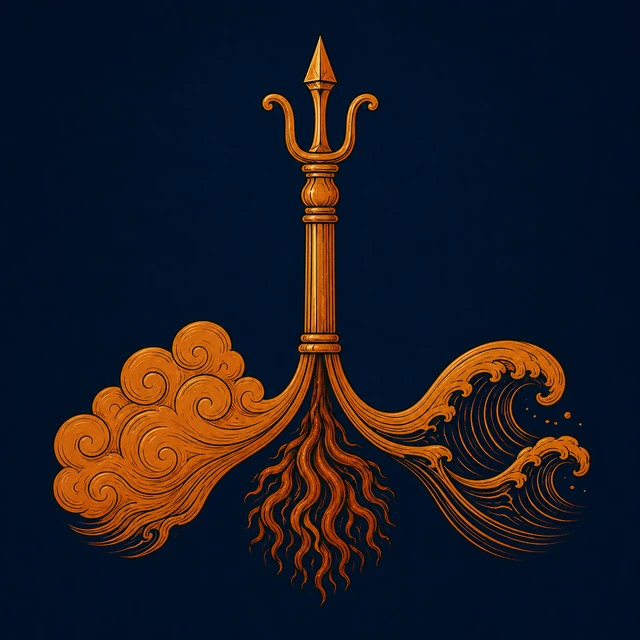
Olympian Order connects victory with settled rule. After Typhoeus falls, Hesiod says the gods, prompted by Gaia, invite Zeus to reign and that Zeus distributes honours. Pseudo-Apollodorus instead specifies lots assigning sky, sea and Hades to the three brothers. This entry presents both mechanisms without letting one overwrite the other, and it never defines a universal roster of Twelve Olympians.
Key facts
Kingship and honours
The gods act on Gaia's prompting to choose Zeus, who then distributes honours among the immortals.
Division by lot
Pseudo-Apollodoran accountThe Bibliotheca divides sky, sea and Hades by lot, and that source should remain visible.
Relationships
- Zeusestablishes the order
Zeus distributes honours as the chosen king.
- Mount Olympuscentred on Olympus
The story uses Olympus as the spatial centre of divine assembly and household.
- Zeusdistributes honours
After becoming king, Zeus distributes honours among the immortals.
- Zeusreceives the sky by lot
The later Bibliotheca says Zeus receives the sky by lot.
- Poseidonreceives the sea by lot
The later Bibliotheca says Poseidon receives the sea by lot.
- Hadesreceives Hades by lot
The later Bibliotheca says Hades receives the underworld by lot.
Story appearances
- Olympian OrderThe divine settlement in which Zeus is chosen as king and distributes honours, with a later lot-based division of realms.
The divine settlement in which Zeus is chosen as king and distributes honours, with a later lot-based division of realms.
Ancient sources
MythWeave distinguishes ancient-source evidence from later adaptations and modern interpretation.