Judgement of the Dead
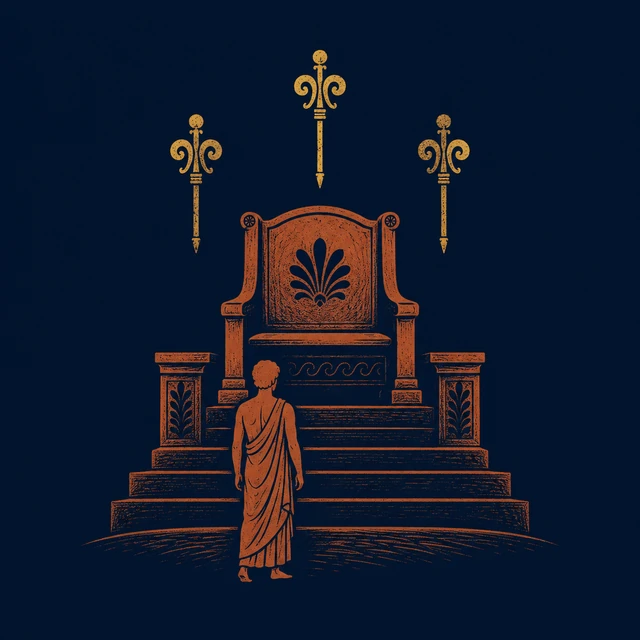
The image of souls judged after death; Plato clearly lists Minos, Rhadamanthus and Aeacus.
Overview
Judgement of the Dead is an underworld image that links souls, authority and consequence. Odyssey Book 11 already gives a compact Homeric vision: Minos appears among the shades with a sceptre, giving judgements while the dead sit around him. Plato’s Gorgias later turns postmortem judgement into a more explicit structure with Minos, Rhadamanthus and Aeacus assigned to examine souls. The layered source picture matters: Homer supplies an underworld judging scene, while Plato develops a philosophical tribunal rather than merely repeating Homer’s geography.
Key facts
Minos judges among shades
Odyssey Book 11 has Odysseus see Minos among the shades holding a sceptre and judging.
Plato’s three judges
The Gorgias explicitly lists Minos, Rhadamanthus and Aeacus, forming a structure of postmortem judgement.
Relationships
- Rhadamanthusjudges the dead
Plato names Rhadamanthus as one of the judges of the dead.
- Aeacusjudges the dead
Plato names Aeacus as one of the judges of the dead.
Ancient sources
MythWeave distinguishes ancient-source evidence from later adaptations and modern interpretation.