Hogni
Giuki’s son and Gunnar’s brother; he carries the family side of the decisions in Sigurd’s death and Atli’s aftershock.
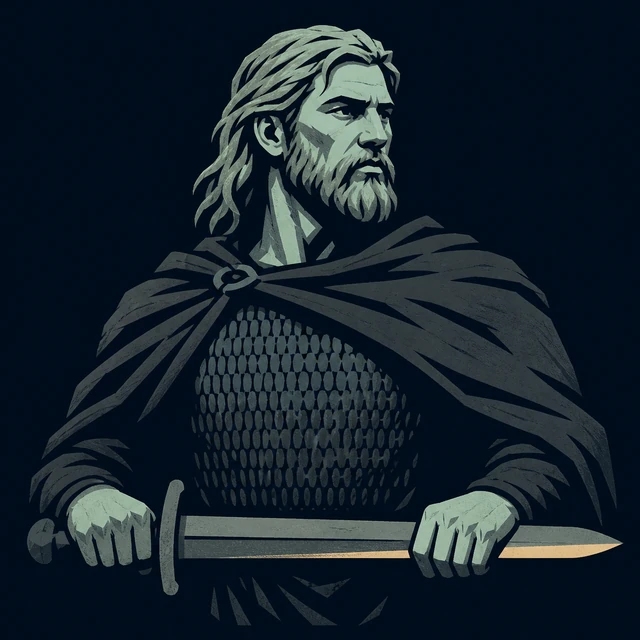
Overview
Hogni represents internal family judgment. He is involved in Sigurd’s death, then shares Gunnar’s fate in Atli’s gold-driven violence.
Relationships
- Giukifather of
Giuki is Hogni’s father.
- Sigurd's Deathshares decision
Hogni is involved in the brotherly decision around Sigurd’s death.
- Atlikills for gold
Atli kills Hogni for the gold.
- Kostberawife of
The poem calls Kostbera Hogni’s wife.
- Kostberawarns
Kostbera urges Hogni not to go, reading both runes and dreams.
- Snaeverfather of
Snaever is called a son of Hogni.
- Solarfather of
Solar is called a son of Hogni.
- Atliorders death of
Atli orders Hogni’s heart cut out.
- Sigurdswears oaths with him
Sigurd and Hogni are both inside the oaths of Gjuki’s sons.
- Gunnarrefuses oath-breaking
Hogni says the oaths sworn with Sigurd should not be broken by swords.
- Brynhildnames her anger
Hogni says Brynhild has whetted Gunnar’s hate.
- Brynhildforesees the Niflung fall
Brynhild says the whole Niflung race will die.
- Gudruntells of death on the southern road
tells of death on the southern road
- Gudrunforesees brothers’ fate
foresees brothers’ fate
- Atlihas Hogni killed
has Hogni killed
- Knefröthinvites him to the hall
invites him to the hall
- Gudrunwarns with a wolf-hair ring
warns with a wolf-hair ring
- Gunnarasks his counsel
asks his counsel
- Atlirides through Myrkwood
rides through Myrkwood
- Gunnarfights for his brother
fights for his brother
- Atlitakes Hogni’s heart
takes Hogni’s heart
Story appearances
- Sigurd and the VolsungsBrother in family decisions
Hogni is involved in the family decision to kill Sigurd and later faces Atli with Gunnar.
- The Greenland Ballad of AtliExisting figure in the longer Atli poem
This poem presents this existing figure with different details.
- The Short Lay of Sigurd: An Oath-Broken BedsideFigure or event in the Short Lay’s oaths, killing, or dying words
Giuki’s son and Gunnar’s brother; he carries the family side of the decisions in Sigurd’s death and Atli’s aftershock.
- Fragment of a Sigurd Lay: The Outdoor Killing VersionFigure or event in the Fragment of a Sigurd Lay
Giuki’s son and Gunnar’s brother; he carries the family side of the decisions in Sigurd’s death and Atli’s aftershock.
- The Old Lay of Guthrun: Recollection and Ominous DreamFigure or event in the Old Lay of Guthrun
Giuki’s son and Gunnar’s brother; he carries the family side of the decisions in Sigurd’s death and Atli’s aftershock.
- The Lament of Oddrun: The Journey and the Failed RescueFigure in the Lament of Oddrun
Giuki’s son and Gunnar’s brother; he carries the family side of the decisions in Sigurd’s death and Atli’s aftershock.
- The Lay of Atli: Ring, Serpents, and RevengeFigure in the Lay of Atli
Giuki’s son and Gunnar’s brother; he carries the family side of the decisions in Sigurd’s death and Atli’s aftershock.
- Guthrun’s Inciting: A Daughter’s Death and Final LamentFigure in Guthrunarhvot
Giuki’s son and Gunnar’s brother; he carries the family side of the decisions in Sigurd’s death and Atli’s aftershock.
- Drap Niflunga: A Bridge between LaysFigure in prose bridge
Giuki’s son and Gunnar’s brother; he carries the family side of the decisions in Sigurd’s death and Atli’s aftershock.
Ancient sources
MythWeave distinguishes ancient-source evidence from later adaptations and modern interpretation.
- Anonymous, Volsunga Saga, Chapters XXVI-XXIX, Sigurd at Giuki's court, Gudrun, Gunnar's wooing and Brynhild's grief
- Anonymous, Volsunga Saga, Chapters XXX-XXXII, Sigurd's killing, Gudrun's lament and Brynhild's ending
- Anonymous, Volsunga Saga, Chapters XXXIII-XXXIX, Gudrun weds Atli, Atli seeks the gold, Gunnar and Hogni die, and Gudrun takes vengeance
- Anonymous, Poetic Edda, Sigurtharkvitha en skamma, Bellows, Brynhild, Gunnar, Hogni, Gudrun and Sigurd's death passages