Groa
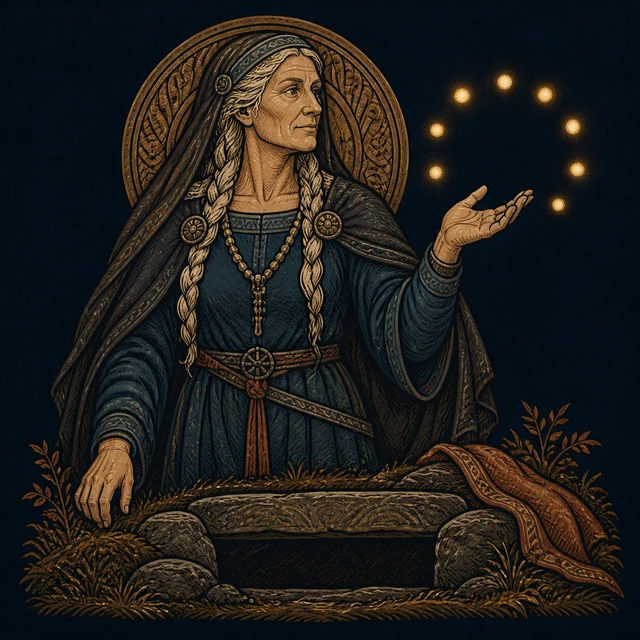
Svipdag’s dead mother, awakened at her grave to speak nine protective charms for her son.
Overview
Groa appears at her grave in Grougaldr. Her son calls her up because he fears the errand his stepmother has imposed. She neither completes it for him nor tells him what he will meet; she answers with nine charms, each asking protection against dangers he may face. The next poem does not bring her back. What remains are her words and the path her son must take himself.
Key facts
She answers at the grave
Svipdag calls her awake at the grave threshold; Groa asks, as his mother, why he has come to seek her still.
Nine charms that do not walk the road for him
Groa speaks nine charms in turn, yet does not cross the hall’s gate for her son or reappear in the next poem.
Relationships
- Svipdagprotects her son with nine charms
protects her son with nine charms
Story appearances
- Svipdagsmol: Charms, the Gate, and RecognitionFigure in the Svipdagsmol composite reading
Svipdag’s dead mother, awakened at her grave to speak nine protective charms for her son.
Ancient sources
MythWeave distinguishes ancient-source evidence from later adaptations and modern interpretation.
- Anonymous; translated by Henry Adams Bellows, The Poetic Edda: Svipdagsmol, Introduction: Grougaldr and Fjolsvinnsmol survive only in paper manuscripts no earlier than the seventeenth century; their union is an editorial arrangement and connecting stanzas may be lost.
- Anonymous; translated by Henry Adams Bellows, The Poetic Edda: Grougaldr, Stanzas 1–16: Svipdag wakes his dead mother Groa, says an unnamed stepmother has sent him to seek Mengloth, and Groa speaks nine charms for him.