Gleipnir
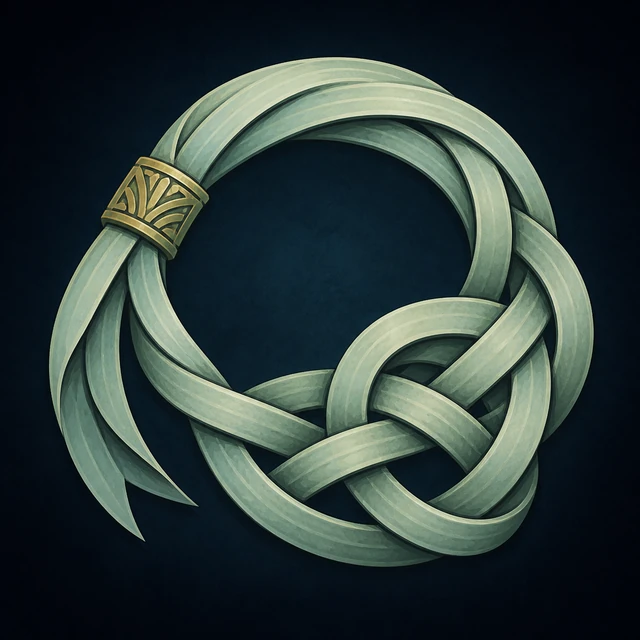
A magical fetter, smooth like silk yet strong enough to bind Fenrir.
Overview
Gleipnir is the point where Fenrir's story truly turns. The gods first bring out two iron fetters to test the wolf's strength, but every break only shows them more clearly that ordinary iron cannot hold him. Then Gleipnir is brought before him. It looks small and soft, almost unlike a restraint, yet it comes from dwarven hands and is made from impossible things. By Gylfaginning 34, the danger no longer lies only in the band itself but in the gods asking Fenrir to trust them. He senses deceit and refuses to be bound lightly; only when Tyr places his hand in the wolf's mouth does the trial truly begin.
Key facts
Made from six impossible things
Chapter 34 lists such materials as a cat's footfall, a woman's beard, a rock's roots, bear sinews, fish breath and bird spittle.
Further spoiler details are available in the interactive atlas.
Relationships
- Odincommissions
After two fetters fail, Odin sends a messenger to the Black Elves' region so dwarves can make Gleipnir.
- Svartalfheimmade in
Gleipnir is made in the Black Elves' region by dwarves.
- Fenrirbinds
Gleipnir tightens as Fenrir struggles and finally binds him effectively.
- Gelgjapasses through the binding
Gelgja passes through the end of Gleipnir, connecting the successful binding to the fastening stone.
Story appearances
- Binding of FenrirSoft-looking decisive fetter
Gleipnir's power lies not in weight but in impossible craft and tightening force; it holds Fenrir until fate arrives.
- Oaths, Treasures and Giant AftershocksSuccessful binding
Only after Gleipnir tightens can the later stone, chain, and support hold Fenrir in place.
Ancient sources
MythWeave distinguishes ancient-source evidence from later adaptations and modern interpretation.