Muses
The nine daughters of Zeus and Mnemosyne who govern song and commission the poet in the Theogony proem.
Overview
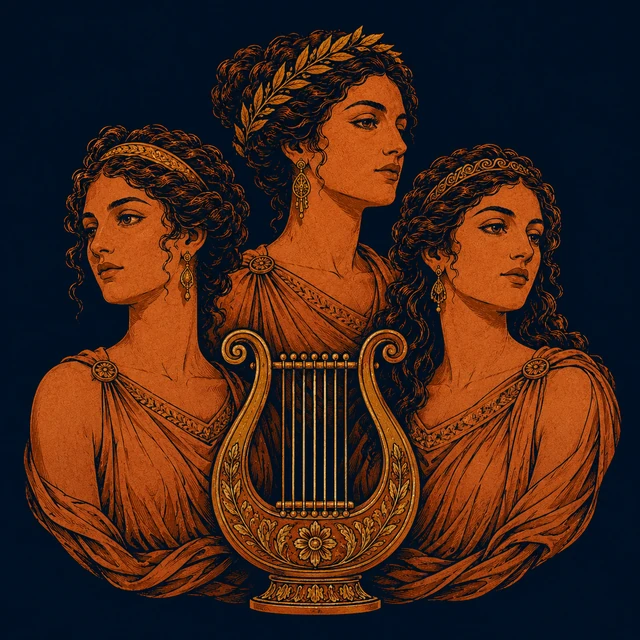
The Muses are nine daughters of Zeus and Mnemosyne concerned with song and the temporary easing of grief. They do not first enter the Theogony at the end of its genealogy: the proem places them on Helicon commissioning the poet and giving him a voice to sing divine origins, honours and succession. They connect the question of who preserves the order with the question of who authorises its narration, without pretending that the poem is a single universal canon.
Key facts
Nine like-minded goddesses
Hesiod calls them nine daughters of one mind whose hearts are set upon song.
Commissioning the poet
In the proem the Muses give the poet a voice and commission a song of divine genealogy and honour.
Relationships
Story appearances
- Birth of the GodsSingers of the proem
The Muses give Hesiod a voice on Mount Helicon and send him to sing the gods’ births, honours and succession.
- Olympian OrderThe nine daughters of Zeus and Mnemosyne who govern song and commission the poet in the Theogony proem.
The nine daughters of Zeus and Mnemosyne who govern song and commission the poet in the Theogony proem.
Ancient sources
MythWeave distinguishes ancient-source evidence from later adaptations and modern interpretation.