Golden Fleece
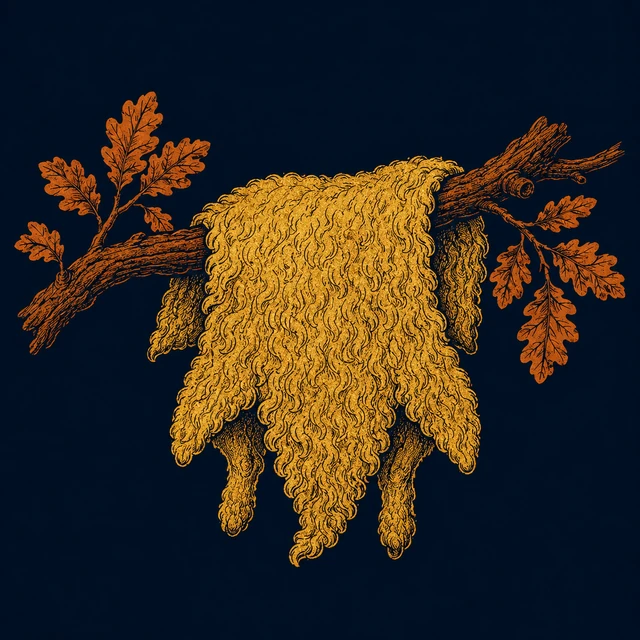
The divine object left by Phrixus, hung on a dragon-guarded oak and drawing the whole expedition to Colchis.
Overview
The Golden Fleece comes from Phrixus’ earlier escape: after the ram carries him to Colchis and is sacrificed, its fleece remains in Aeetes’ land. Pelias turns its recovery into a dangerous means of sending Jason away, while Aeetes protects his authority through the trial. After Medea helps Jason overcome the fire-breathing bulls, earthborn warriors and guardian dragon, the Fleece also becomes the sign she carries away from home.
Key facts
From Phrixus’ ram
Phrixus sacrifices the golden ram that carried him to Colchis, while its Fleece remains there.
Taken after the bargain collapses
After Jason completes the test and Aeetes still withholds the prize, Medea guides him to subdue the dragon and take the Fleece.
Relationships
- Argonaut Expeditionis the expedition objective
Pelias’ command makes the Golden Fleece the stated objective of the voyage.
- Phrixusleaves behind
Phrixus reaches Colchis on the ram and leaves its Fleece there after sacrifice.
- Colchishangs in the grove of Ares
The Fleece hangs on an oak in the Colchian grove of Ares.
- Aeeteswithholds after completion
After the trial, Aeetes still withholds the Fleece and prepares to destroy the ship.
- Colchian Dragonguards sleeplessly
The Colchian dragon coils around the oak and guards the Fleece day and night.
- Jasontakes from the oak
Once the dragon is subdued, Jason removes the Fleece from the oak and carries it to Argo.
Story appearances
- The ArgonautsGolden Fleece in the Argonaut expedition
Golden Fleece enters this story through the Argonaut expedition; other versions are handled where their own episodes call for them.
Ancient sources
MythWeave distinguishes ancient-source evidence from later adaptations and modern interpretation.
- Apollonius Rhodius, Argonautica, Book 1.1–22: one-sandal oracle, Pelias and the Fleece command
- Apollonius Rhodius, Argonautica, Book 2.1030–1285: sons of Phrixus, Fleece history and arrival in Colchis
- Apollonius Rhodius, Argonautica, Book 4.6–211: Medea flees, the dragon is subdued and the Fleece is taken
- Pindar, Pythian 4, Lines 125–299: one-sandal oracle, Chiron and Pelias’ Fleece bargain
- Apollonius Rhodius, Argonautica, Book 3.210–438: Aeetes receives Jason and imposes the deadly test
- Apollonius Rhodius, Argonautica, Book 3.1163–1407: Hecate rite, fire-breathing bulls and earthborn warriors
- Apollonius Rhodius, Argonautica, Book 4.294–551: Apsyrtus pursues, is lured and killed
- Apollonius Rhodius, Argonautica, Book 4.552–981: Zeus’ storm, Circe’s purification, Sirens and strait hazards
- Apollonius Rhodius, Argonautica, Book 4.982–1169: Colchian reclamation and the marriage decision
- Apollonius Rhodius, Argonautica, Book 4.1170–1637: Syrtes, carrying Argo and Triton’s guidance
- Apollonius Rhodius, Argonautica, Book 4.1638–1781: Talos, Anaphe and return to Pagasae