Erebus
The primordial darkness born from Chaos who joins with Nyx and fathers Aether and Hemera.
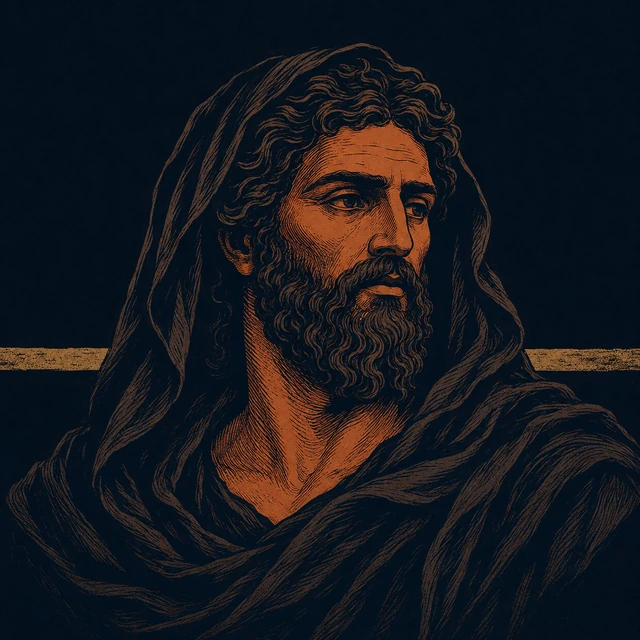
Overview
Erebus is the primordial darkness that comes from Chaos beside Nyx in Hesiod’s Theogony. The poem does not give him a mortal-style biography or make him an intentional creator; his first role is to place darkness within the earliest cosmic order. Nyx joins with him and bears Aether and Hemera, so upper brightness and day emerge after night and darkness. Later in the same poem Zeus sends Menoetius down to Erebus, showing that the name can also point to the dark depth of the world. The personal and spatial senses thus gather within one primordial image of darkness.
Key facts
From Chaos beside Nyx
After Gaia, Tartarus and Eros, the Theogony says that Erebus and black Night come from Chaos; the passage does not assign Chaos an intention to create them.
Aether and Day through Nyx
Hesiod’s Theogony sequenceNyx joins with Erebus and bears Aether and Hemera; this is the primordial genealogy of Hesiod’s poem, not a single cosmology shared by every Greek author.
Also a dark depth
Later the Theogony says Zeus strikes Menoetius for his presumption and sends him down to Erebus, where the name carries the sense of a dark depth or underworld region.
Relationships
Story appearances
- Birth of the GodsThe primordial darkness that comes from Chaos
Erebus and Nyx come from Chaos; their union produces Aether and Hemera, placing darkness and brightness within one primordial genealogy.
Ancient sources
MythWeave distinguishes ancient-source evidence from later adaptations and modern interpretation.