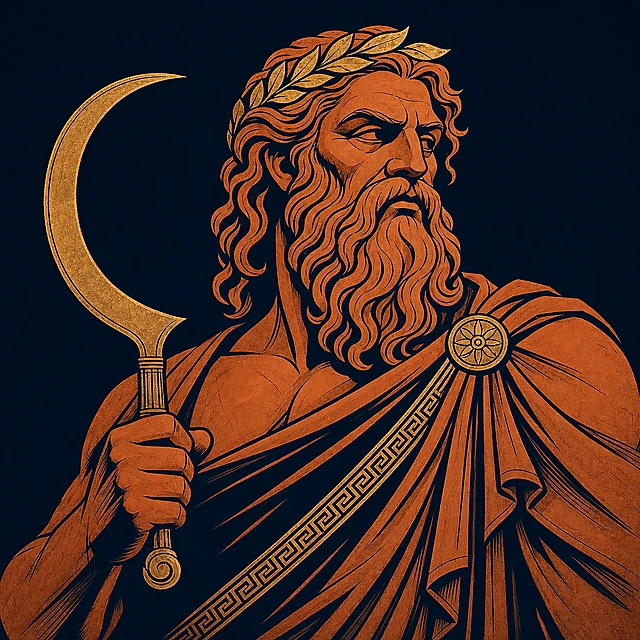
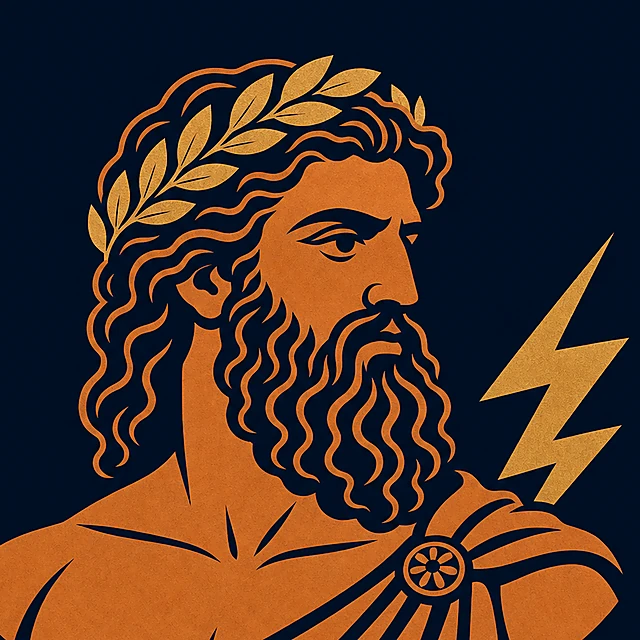
Greek myth context: in Hesiod's Theogony, Cronus hears a succession prophecy before Olympian rule.
Gaia and Uranus warn Cronus that one of his children will take his royal honour. He swallows each newborn, so Rhea hides Zeus and gives Cronus a wrapped stone instead.
Cronus tries to prevent succession. His violence gives Rhea a reason to save the child who will replace him.
Sources: Hesiod, Theogony 453-491
Open the interactive story →
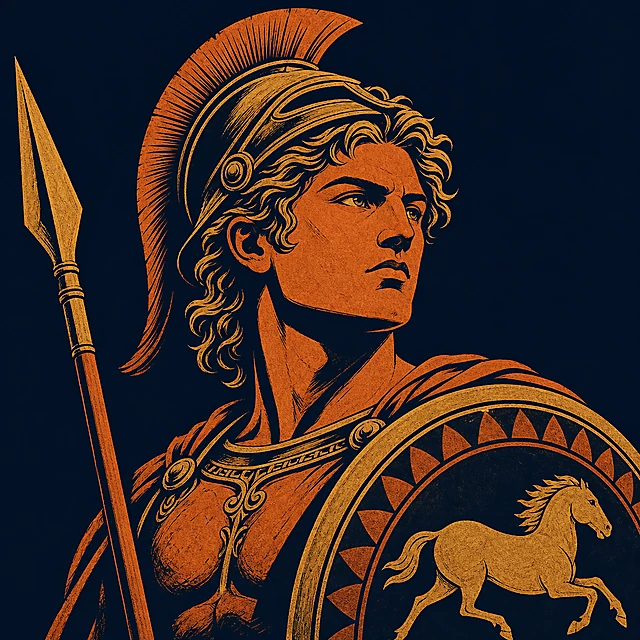
Greek myth context: in the opening of the Iliad, a Trojan War quarrel divides Achilles and Agamemnon.
Agamemnon returns Chryseis, then takes Briseis from Achilles as compensation. Achilles treats the seizure as a public loss of honour and withdraws from battle.
A dispute over honour removes the Achaeans' strongest fighter and turns one seizure into an army-wide crisis.
Sources: Homer, Iliad Books 1 and 9
Open the interactive story →
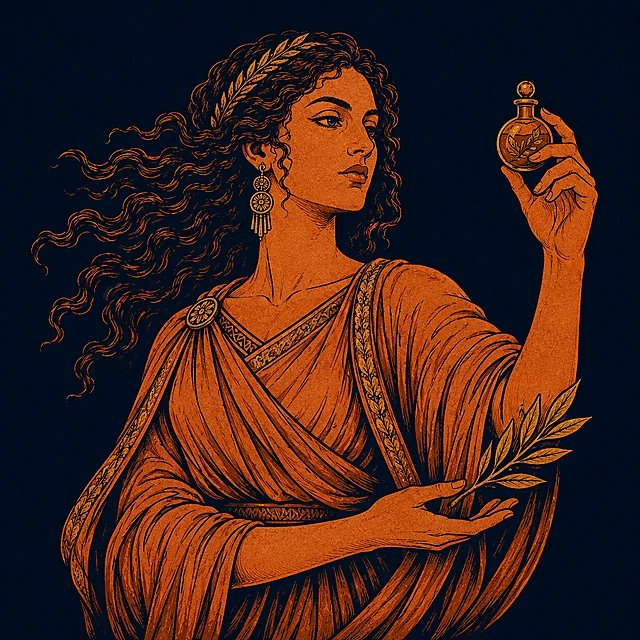
In the Argonautica, Jason reaches Colchis for the Golden Fleece and needs Medea's help to survive Aeetes' trial.
Hera and Athena enlist Aphrodite, whose son Eros strikes Medea with desire and pain. Medea still weighs loyalty, fear and flight before choosing to give Jason a charm and a plan.
Divine intervention begins Medea's crisis. Her own decision changes Jason's trial and the voyage home.
Sources: Apollonius Rhodius, Argonautica Book 3
Open the interactive story →
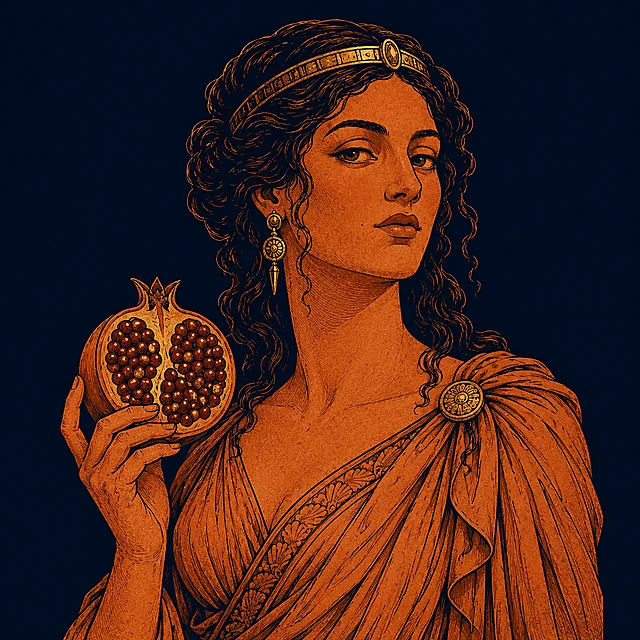
The Homeric Hymn to Demeter tells the Greek myth in which Hades takes Persephone and Demeter's grief brings famine.
Demeter's famine forces the gods to arrange Persephone's return from Hades. Because Persephone has eaten pomegranate seed below, the settlement divides her year between Hades and Demeter.
The divided year ends the famine without undoing the abduction or Persephone's bond with the realm below.
Sources: Homeric Hymn to Demeter 1-39 and 305-433
Open the interactive story →
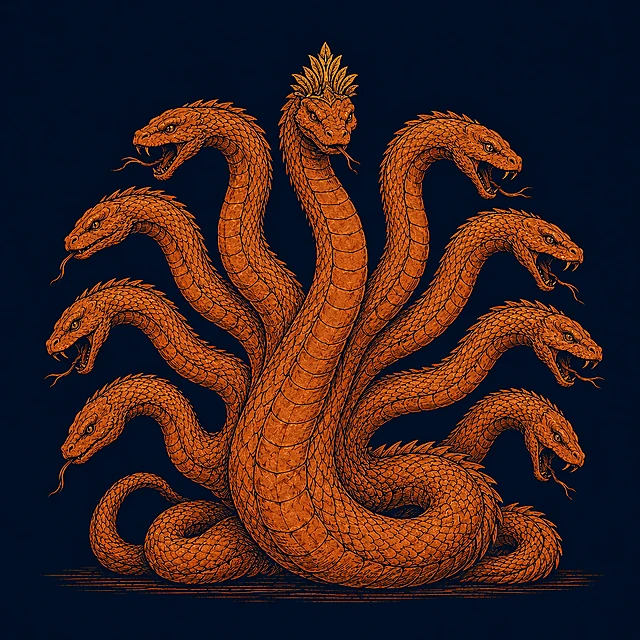
The Labours of Heracles include the Lernaean Hydra, a many-headed monster in the tasks judged by Eurystheus.
Iolaus cauterises the severed necks, stopping two heads from replacing each one Heracles cuts. Eurystheus refuses to count the victory because Heracles used another person's help.
The Hydra dies, but the rule imposed by Eurystheus decides whether the task counts.
Sources: Pseudo-Apollodorus, Library 2.5.2
Open the interactive story →
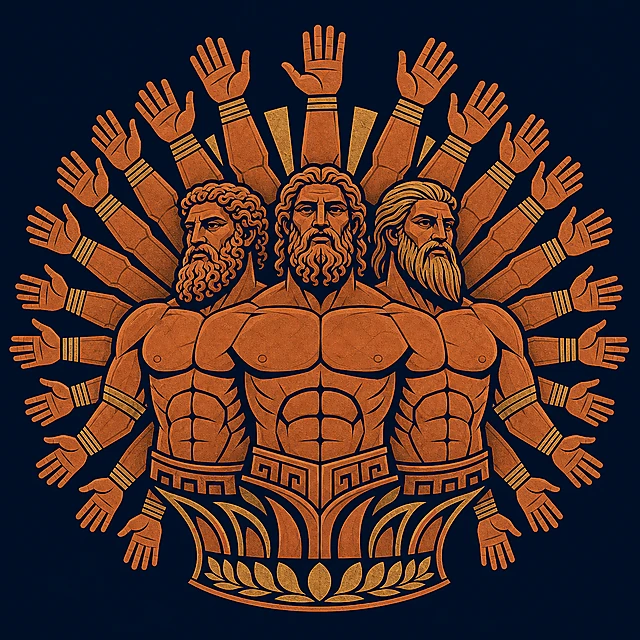
The Titanomachy is the Greek myth of the long war between Zeus' side and the Titans before Olympian rule is secured.
After ten years without a decision, Gaia says the imprisoned Hundred-Handers can change the war. They accept Zeus' alliance and bury the Titans under a storm of rocks.
Freeing the prisoners gives Zeus the allies who can end the ten-year deadlock.
Sources: Hesiod, Theogony 617-735
- Hesiod, Theogony, Lines 617–653: prolonged war, the Olympus and Othrys camps, Gaia's counsel to free the Hundred-Handers, and Zeus's invitation to fight
- Hesiod, Theogony, Lines 644–663: Zeus invites the Hundred-Handers to fight and Cottus answers, recalling their release
- Hesiod, Theogony, Lines 687–735: Zeus' thunder, cosmic upheaval, three hundred stones, and the Titans defeated and bound
Open the interactive story →
The Odyssey follows Odysseus' journey home from Troy, and this episode begins with the blinding of Poseidon's son.
Odysseus blinds Polyphemus, Poseidon's son, while escaping from the Cyclops' cave. Odysseus reveals his true name, allowing Polyphemus to ask his father to delay the homecoming.
A successful escape becomes a long conflict once Polyphemus can name his attacker to Poseidon.
Sources: Homer, Odyssey Books 1, 5 and 9
Open the interactive story →
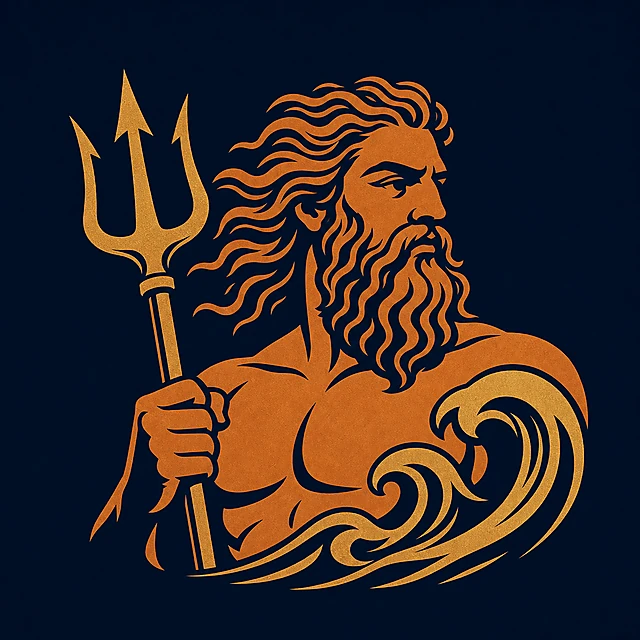
The Olympian order follows the fall of the older divine powers, when Zeus and his brothers divide rule.
In Pseudo-Apollodorus, the three brothers use lots to divide rule after the war. Zeus receives the sky, Poseidon the sea and Hades the Underworld.
In the Bibliotheca, lots divide the three realms; Hesiod describes a broader distribution of honours.
Sources: Pseudo-Apollodorus, Library 1.2.1; compare Hesiod, Theogony 853-885
- Pseudo-Apollodorus, Bibliotheca, 1.2.1: Metis' drug, ten-year war, Gaia's prophecy, Campe, three weapons, Titan imprisonment and division by lot
- Hesiod, Theogony, Lines 853–885: Typhoeus defeated, Zeus chosen as king and honours distributed
Open the interactive story →
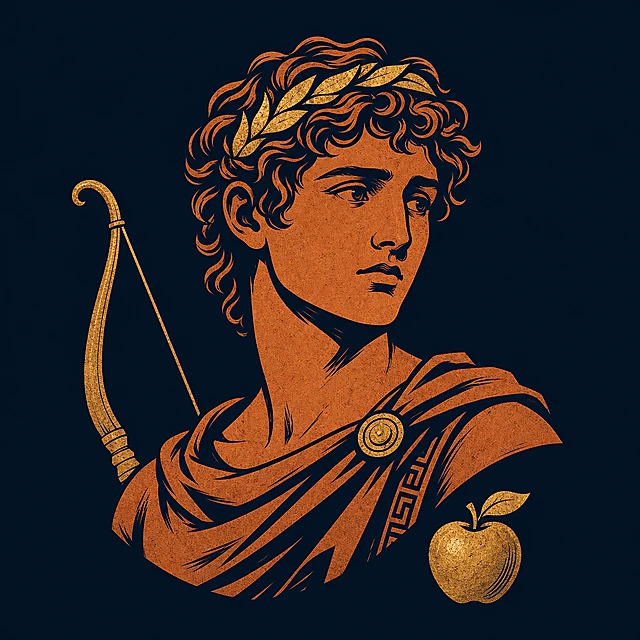
Paris' choice among the goddesses comes before Helen leaves Sparta and before the Achaean expedition gathers.
Hera, Athena and Aphrodite each promise Paris a different reward. Paris accepts Aphrodite's promise of Helen, and that choice helps set the war in motion.
Paris chooses Aphrodite because she promises Helen. That promise then leads toward his departure with Helen and the war that follows.
Sources: Pseudo-Apollodorus, Epitome 3.1-5
Open the interactive story →
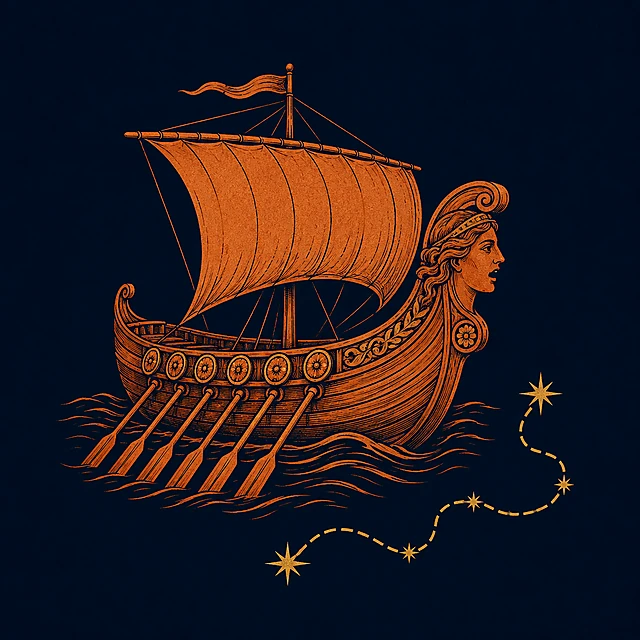
The Argonautica voyage carries Jason's crew toward Colchis; Heracles is still aboard when Hylas disappears.
Hylas disappears while fetching water, and Heracles stays ashore to search for him. Argo sails before the crew realises that Heracles has not returned.
Heracles is left behind because the search for Hylas and the ship's departure fall out of step.
Sources: Apollonius Rhodius, Argonautica 1.1153-1328; Pseudo-Apollodorus, Library 1.9
Open the interactive story →
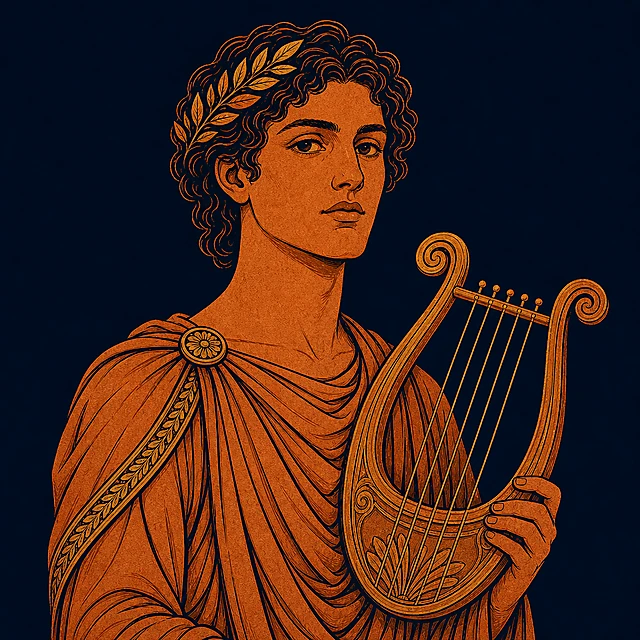
The underworld descent tells the Greek myth in which Orpheus tries to bring Eurydice back from the realm of the dead.
Persephone permits Eurydice to return on the condition that Orpheus does not look back first. Orpheus looks back before he has left the realm, so the conditional return fails.
The source states the condition and its breach. It does not explain a private motive for the glance.
Sources: Pseudo-Apollodorus, Library 1.3.2
Open the interactive story →
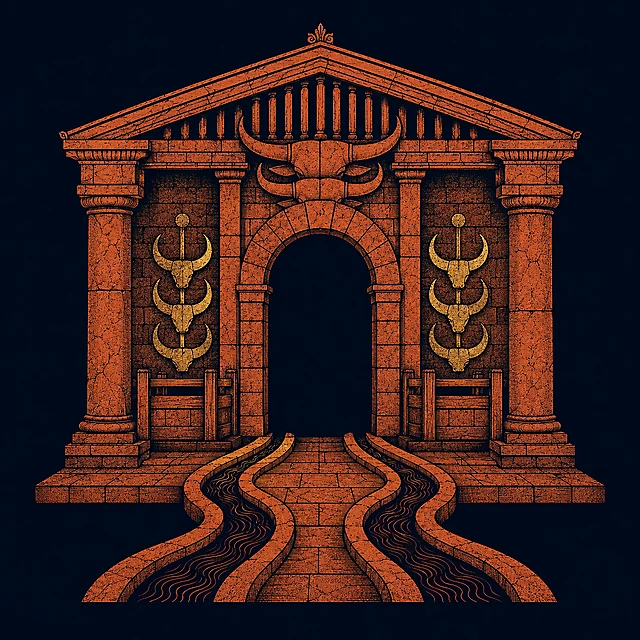
The Augean Stables episode belongs to the Labours of Heracles, where Eurystheus judges whether each task counts.
Heracles bargains with Augeas for payment before diverting two rivers through the yard. Augeas refuses to pay, and Eurystheus rejects the labour because a reward was involved.
The yard is clean. The bargain gives Eurystheus a reason to refuse the result.
Sources: Pseudo-Apollodorus, Library 2.5.5
Open the interactive story →
The Odyssey ending brings Odysseus back to Ithaca in disguise after years away from Penelope and his household.
After years of absence and a concealed return, Penelope needs proof that a stranger cannot copy. Odysseus knows the bed is built around a rooted olive tree, confirming knowledge shared only by the couple.
The bed turns recognition into evidence. His reaction confirms an identity that appearance alone cannot prove.
Sources: Homer, Odyssey Book 23
Open the interactive story →