Punishments in Hades
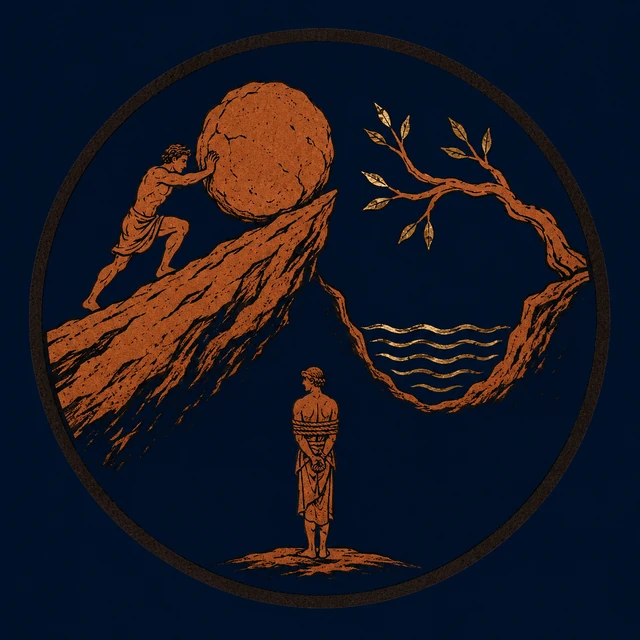
A cluster of afterlife punishment scenes; the Odyssey shows extreme examples through Tityus, Tantalus and Sisyphus.
Overview
Punishments in Hades are not one single plot but a cluster of scenes in which wrongdoing continues to have visible consequences after death. Odyssey Book 11 shows figures such as Tityus, Tantalus and Sisyphus caught in repeated pain, desire or labour, making the underworld a place where certain lives remain legible through penalty. Plato’s Gorgias later joins punishment to a more explicit judgement of the soul. The Homeric spectacle of punished shades remains separate from the later philosophical afterlife system.
Key facts
The punished in the Odyssey
Odyssey Book 11 shows several shades being punished in Hades.
Later ethical order
The Gorgias connects judgement and punishment after death into an image of the soul bearing consequences.
Relationships
Ancient sources
MythWeave distinguishes ancient-source evidence from later adaptations and modern interpretation.