Minos
Son of Zeus who holds a golden sceptre and judges the dead in Odysseus’ vision.
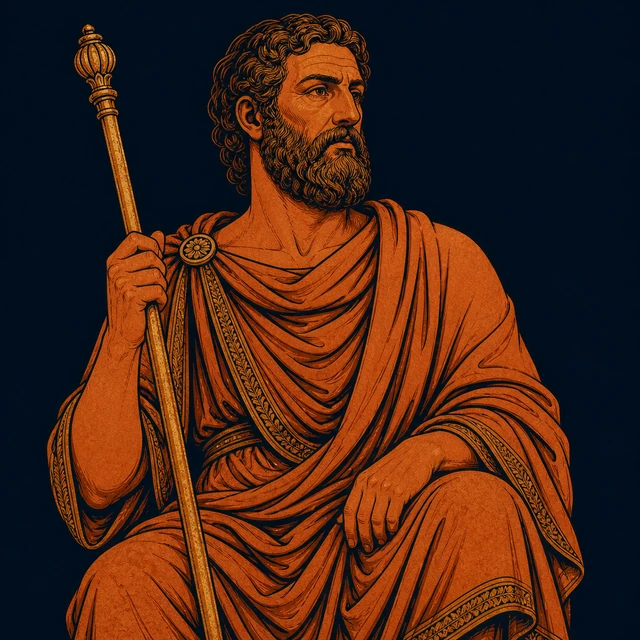
Overview
In Odyssey 11, Minos appears as an adjudicator within the scene reported by Odysseus. Holding a golden sceptre, he sits while other shades stand or sit in the wide-gated house of Hades and ask for decisions. The poem calls him a son of Zeus but does not establish the later familiar system of three judges or explain a complete standard of sentencing. This entry therefore preserves the Homeric scene only: Minos exercises kingly judgement among the dead without importing a later tribunal of Minos, Rhadamanthus and Aeacus into the chapter.
Relationships
- Descent to the Underworldjudges among the dead
Odysseus sees Minos holding a golden sceptre while shades seek his decisions.
- Heraclespermits but does not assist
Minos permits the taking but requires Heracles to manage the capture himself.
Story appearances
- Gates of the UnderworldGolden-sceptred judge in the Homeric scene
Golden-sceptred judge in the Homeric scene, part of the Underworld story's crossings, losses, judgments or guarded spaces.
- The Labours of HeraclesMinos in the Labours
Minos enters this story through Heracles' labours; when other stories return to the figure, they follow that later setting.
Ancient sources
MythWeave distinguishes ancient-source evidence from later adaptations and modern interpretation.