The Division at Mecone
Prometheus divides an ox into two portions for Zeus to choose, in Hesiod’s account of the sacrificial division between gods and mortals.
Overview
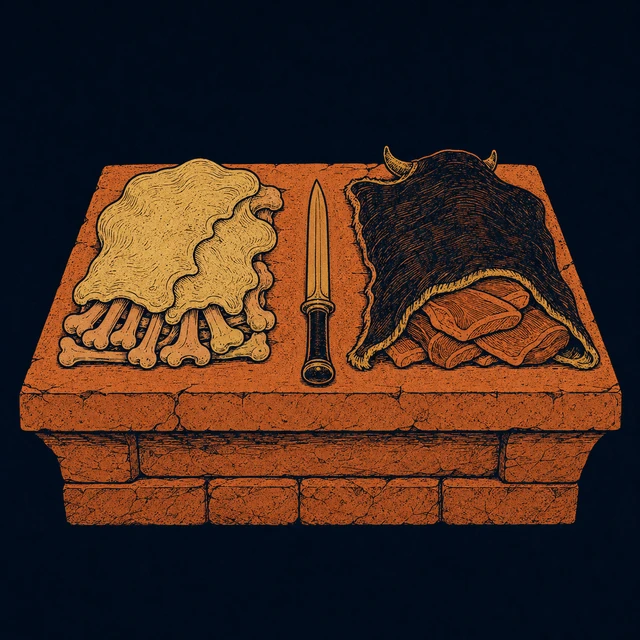
The division at Mecone is the turning point in the Theogony’s conflict between Prometheus and Zeus. Prometheus divides an ox into two portions: edible meat and entrails are concealed beneath the hide and stomach, while white bones are covered with gleaming fat for Zeus to choose. The poem has Zeus recognise the arrangement yet still make the choice, then uses the episode to explain the mortal custom of burning white bones for the gods. This is not a single historical account of every Greek sacrifice, but Hesiod’s narrative explanation of the boundary joining gods, mortals, food and ritual.
Key facts
Two portions of the ox
Prometheus hides the meat in the less attractive portion and covers white bones with gleaming fat.
An explanation of burned bones
Hesiod connects Zeus’s choice with the later mortal practice of burning white bones on altars.
Relationships
- Prometheusarranges the sacrificial division
Prometheus divides the ox into two portions, placing concealed meat and covered bones before Zeus.
- Zeuschooses the fat-covered portion
Zeus selects the portion with white bones beneath gleaming fat, while the poem also says he recognises the arrangement.
- The Theft of Fireleads Zeus to withhold fire
After the conflict over sacrifice, Zeus no longer gives the strength of fire to mortals.
Story appearances
- Olympian OrderThe turning point that redefines the sacrificial shares of gods and mortals
Prometheus arranges Zeus’s choice between two portions of the ox, and Hesiod uses the result to explain the burning of white bones on altars.
Ancient sources
MythWeave distinguishes ancient-source evidence from later adaptations and modern interpretation.